Quick Warm-up: 5 Minutes to Prevent Injuries in Pickup Games
You know that friend who always shows up late and jumps straight into the game without warming up? Chances are they’ve complained about a muscle strain, a sprain, or that nagging soreness the next day. The hard truth: according to FIFA studies, up to 50% of injuries in amateur soccer can be prevented with proper warm-up.
But relax. Nobody needs a 30-minute ritual before a pickup game. Sports science shows that a well-structured 5-minute routine is enough to prepare the body and significantly reduce injury risk. In this article you’ll learn the physiology behind warming up and a quick, effective protocol.
Why the Body Needs a Warm-up
Your body isn’t a machine that turns on instantly. At rest, muscles receive minimal blood flow, joints are "cold," and your nervous system is in relaxed mode.
Playing in that state is like revving a cold engine. It works, but you’re asking for trouble.
What Happens When You Move Without Warming Up
When you sprint or make sudden moves without preparation:
- Muscles are stiff. Cold muscle fibers are less elastic. Sudden direction changes can cause micro-tears or strains.
- Joints are "dry." Synovial fluid that lubricates joints circulates properly only with movement. Without it, friction increases and the risk of sprains rises.
- The nervous system is sluggish. Reflexes, coordination, and reaction time aren’t at their peak. This increases falls and accidental collisions.
The good news? A few minutes of progressive movement reverses this.
The Science of a 5-Minute Warm-up
Research published in the British Journal of Sports Medicine shows that short dynamic warm-ups (5–10 minutes) are as effective as longer protocols for recreational activities.
The secret is a progression of intensity and movement variety. You don’t need equipment or a huge space—just follow a physiological logic.
The 3 Pillars of a Quick Warm-up
1. Cardiovascular Activation (2 minutes) Goal: raise heart rate and increase blood flow to muscles.
2. Joint Mobility (2 minutes) Goal: lubricate joints and increase range of motion.
3. Neuromuscular Activation (1 minute) Goal: wake up coordination, balance, and explosive power.
Complete Protocol: 5 Minutes Before the Game
Here’s a warm-up you can do anywhere, even at the edge of the field. No equipment required.
Minutes 1–2: Cardiovascular Activation
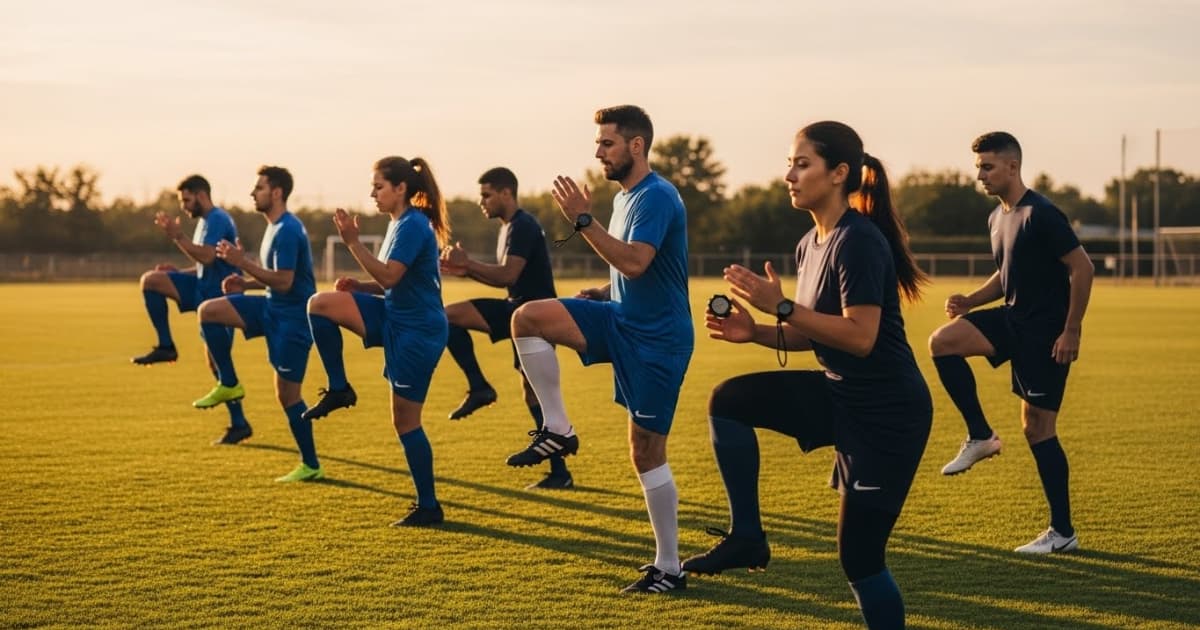
Easy jog with variations (2 minutes)
- Start with a light jog at a conversational pace.
- Every 20 seconds add a variation:
- High knees
- Heel kicks (bring heels toward glutes)
- Lateral shuffles (side steps)
- Backward jog (short backward steps)
Why it works: These variations warm different muscle groups (quads, hamstrings, glutes, calves) and already activate movements specific to soccer.
Minutes 3–4: Joint Mobility
Dynamic mobility circuit (2 minutes) Do 5–8 reps of each movement with no pauses:
Ankle circles Lift one foot and make wide circles with the ankle (5 each direction).
Leg swings (front to back) Hold onto something for balance if needed. Swing one leg forward and back, gradually increasing range.
Leg swings (side to side) Same idea, swinging the leg laterally. This prepares the adductors—muscles vulnerable during direction changes.
Squat with trunk rotation Squat comfortably, and at the bottom twist your torso to one side, then the other. This mobilizes hips, knees, and the spine simultaneously.
Why it works: Dynamic movements lubricate joints and prepare muscles specifically for the game’s gestures. Unlike static stretches (holding a position for 30 seconds), dynamic warm-ups improve performance without reducing explosive strength.
Minute 5: Neuromuscular Activation
Explosive and coordination drills (1 minute) Choose two exercises and perform 3 quick reps of each:
Skipping in place (fast high knees) Run on the spot lifting your knees quickly, as if jumping rope.
Short sprints (5 meters) From a standstill, accelerate at max effort for 5 meters and decelerate. Repeat 3 times.
Alternating bounds Jump alternately forward or upward as if climbing imaginary steps.
Why it works: These explosive moves "switch on" the central nervous system. Your brain signals fast-twitch muscle fibers, improving reflexes and coordination.
Common Mistakes That Nullify the Warm-up
Even with a 5-minute plan, people often waste the effort with simple mistakes:
Stretching Too Much Before Playing
Static stretching (holding a position for 30+ seconds) can be counterproductive before explosive activities. Studies show prolonged static stretches temporarily reduce strength and speed.
What to do: Save static stretches for after the game during cooldown. During warm-up, prefer dynamic movements.
Warming Up and Then Standing Still
Warming up and then chatting on the sidelines for 10 minutes is pointless—the body cools down quickly.
What to do: Warm up right before kickoff. If there’s a delay, keep moving lightly (walking, easy jogs).
Ignoring "Forgotten" Body Parts
Many warm the legs but neglect the core (abdomen and lower back) and ankles. The result: injuries from imbalance or twists.
What to do: Include trunk rotations, lateral movements, and ankle mobility.
Beyond Warm-up: Other Protective Factors
Warm-up is crucial but not the only variable that protects against injury.
Hydration Starts Early
Dehydrated muscles have reduced contraction capacity and higher risk of cramps and injuries. Drink water in the two hours before the game—not just during.
Proper Footwear
Worn-out boots or shoes inappropriate for the playing surface increase the risk of sprains and falls. Check outsole condition and choose studs appropriate for the field.
Sleep and Recovery
A poorly recovered body has worse reflexes and reduced muscular endurance. If you slept poorly, pay extra attention to warm-up and avoid overly aggressive moves.
What to Do If an Injury Occurs
Even with precautions, injuries can happen. Acting quickly matters.
PRICE First Aid Protocol
- P (Protection): Protect the injured area. Stop playing immediately.
- R (Rest): Rest. Don’t force the injured limb.
- I (Ice): Apply ice for 15–20 minutes, using a cloth to protect the skin.
- C (Compression): Use a light elastic bandage to reduce swelling.
- E (Elevation): Elevate the limb above heart level.
When to Seek Medical Care
Seek professional help right away if there is:
- Severe swelling or visible deformity
- Intense pain that doesn’t ease with rest
- Inability to bear weight on the limb
- Persistent numbness or tingling
Warm-up Is a Commitment to Longevity
In professional soccer, no player enters the pitch without warming up. They know the body is their tool and protecting it is a priority.
For amateur players, the same logic should apply. Pickup games are about leisure, socializing, and quality of life. A preventable injury can mean weeks sidelined, treatment costs, and the frustration of missing out.
Five minutes of warm-up may seem small, but it’s a high-return investment. You’ll perform better, feel less sore the next day, and most importantly, stay in the game for years.
Conclusion: Make It a Habit and Reap the Rewards
The 5-minute quick warm-up is science-based, field-tested, and accessible to everyone. It requires no equipment, doesn’t take much time, and provides immediate and cumulative benefits.
Next time you arrive for a pickup game, don’t jump straight in. Spend a few minutes waking up the body—your muscles, joints, and performance will thank you.
And if you organize pickup games regularly, consider implementing a collective warm-up routine. Use tools like the Team Generator to split teams fairly and ensure balanced matches. Balanced teams + prepared players = guaranteed fun and fewer injuries.
Warm up, play, and enjoy. Your body deserves the care.